
Insights
The Comply.LM blog
Plain-English guidance on AUSTRAC, AML/CTF obligations, and the operational detail of running a compliant practice.

AML/CTF compliance
Choosing AML/CTF Software? What AUSTRAC Says You Should Expect, and Watch Out For
AUSTRAC doesn't endorse RegTech products, and your firm stays responsible for compliance. Here's how to choose software that actually helps.

AML/CTF compliance
AUSTRAC's 2026–27 Priorities: What They Mean for Your Firm
AUSTRAC has named five regulatory priorities for 2026–27. Here's how each one affects newly regulated legal and conveyancing firms.

AML/CTF compliance
Your ML/TF Risk Assessment Should Be a Living Document, Not a PDF in a Drawer
The risk assessment is the foundation of your AML/CTF program. Here's how to build one that reflects your actual practice and stays current.

AUSTRAC reporting
The 7 Reporting Mistakes AUSTRAC Keeps Seeing, and How to Avoid Them
AUSTRAC says data quality is your responsibility whatever reporting method you use. These are the errors it sees most often.

AUSTRAC reporting
IFTIs and CBMs: What Solicitors Handling Estates and Overseas Clients Need to Know
International transfers and physical cross-border movements of cash each have their own AUSTRAC report. Here's the difference, and when it may matter for your firm.

AUSTRAC reporting
Cash, Conveyancing and the $10,000 Rule: TTRs Explained
If your firm receives or pays $10,000 or more in physical cash for a designated service, you must lodge a TTR within 10 business days. Here's how, and how to spot structuring.

AUSTRAC reporting
Tipping Off: The Confidentiality Trap Small Firms Don't See Coming
Once you've formed a suspicion or lodged an SMR, telling the client, even by implication, can be an offence. Here's how to protect your firm.

AUSTRAC reporting
Why AUSTRAC Is Worried If Your Firm *Never* Lodges an SMR
AUSTRAC says low SMR submissions may signal weak risk assessment and monitoring. Here's what that means for small law firms.

AUSTRAC reporting
Suspicious Matter Reports (SMRs): A Plain-English Guide for Lawyers
When must a law firm lodge an SMR, how fast, and what makes a good one? A practical guide based on AUSTRAC's latest guidance.

AML/CTF compliance
Tranche 2 Is Live. What Every Law and Conveyancing Firm Must Have in Place Now
Since 1 July 2026, many Australian law and conveyancing firms are AML/CTF reporting entities. Here's what AUSTRAC expects and how to get there without derailing your practice.
Compliance
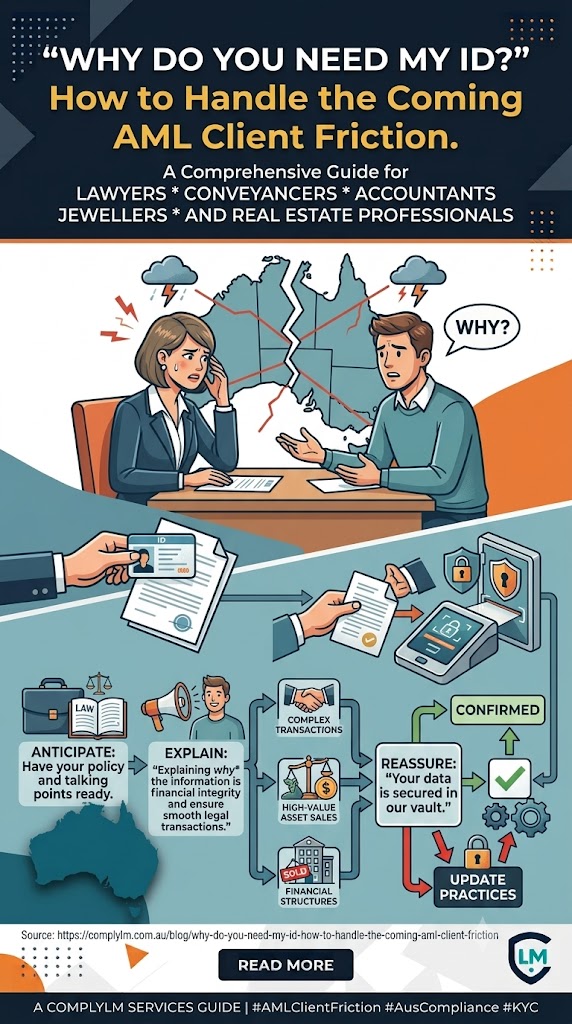
Why Do You Need My ID?" How to Handle the Coming AML Client Friction
Provide actionable scripts and strategies for managing client pushback regarding new identity and source-of-funds verification, highlighting Comply.LM's client-friendly tools. It's a scene every lawyer dreads. A long-term client who has trusted you with their family and business matters for fifteen years calls to open a new file. You politely explain that under the new July 2026 AUSTRAC laws, you need them to upload a photo of their passport and complete a digital face scan. There is a long pause on the line. "Why? You've known me for over a decade. Don't you trust me?" As Tranche 2 takes effect, client friction is going to be one of the biggest daily hurdles for legal staff. If your team isn't prepared to explain why these checks are happening, it can damage hard-won client relationships.

Compliance
The July 2026 Clock is Ticking: A Practical Roadmap to Tranche 2 AML Compliance for Australian Law Firms
Demystify the upcoming reforms, ease anxiety with a practical roadmap, and introduce Comply.LM as the ultimate shortcut to readiness. It’s no longer a distant "what if." From 1 July 2026, Australia's anti-money laundering and counter-terrorism financing (AML/CTF) regime expands to cover "gatekeeper" professions—including lawyers, conveyancers, and accountants. If your law firm provides "designated services" (such as acting as a formation agent, managing client money, or handling real estate transactions), you will fall under AUSTRAC's watchful eye.
Compliance
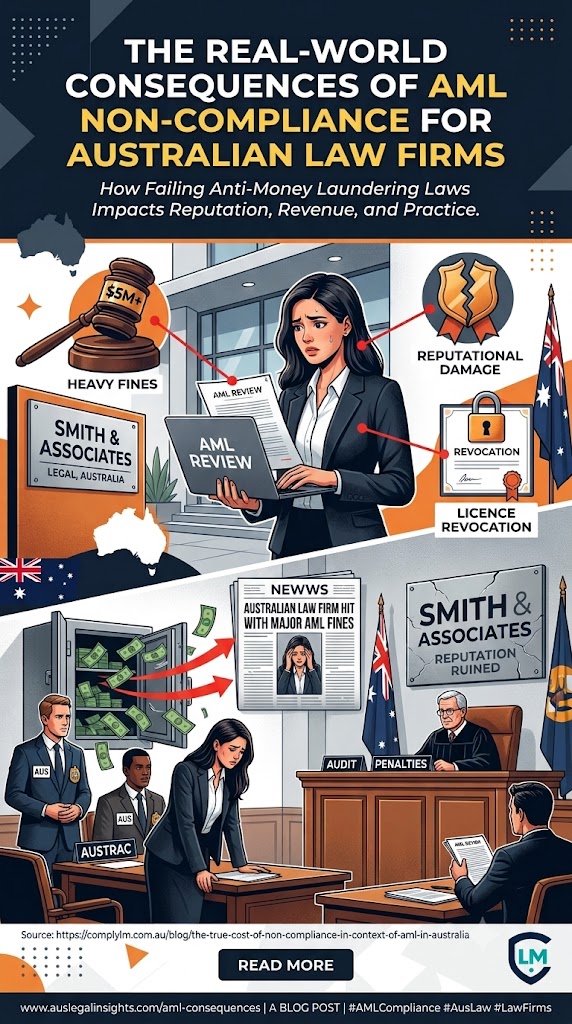
The True Cost of Non-Compliance in context of AML in Australia
Present the stark, updated financial and criminal realities of AUSTRAC non-compliance starting July 2026, and show how a firm’s brand is its most vulnerable asset. For decades, many Australian law firms viewed anti-money laundering (AML) compliance as "a banking problem." But as of 1 July 2026, that buffer is officially gone. Now that Tranche 2 laws are active, legal practices face the exact same regulatory oversight as multinational banks. AUSTRAC has made it clear that they are not a toothless tiger. If your firm handles property settlements, manages client trust accounts, or acts as a corporate formation agent, the stakes of ignoring your compliance program are incredibly high.

Compliance
Your roadmap to July 2026 AML/CTF compliance
A phase-by-phase plan — from risk assessment to independent evaluation — so your firm is operational on day one.

Client communications
AUSTRAC customer poster (April 2026)
Print or share AUSTRAC's official poster to set client expectations on identity checks, ownership questions, and why they're being asked.

Training
PDD training: rolling out role-specific AML/CTF learning
Personnel Due Diligence depends on completed, certificated training. Here's where to find AUSTRAC's official material — and how to use it.

Practice
Conveyancing CDD: onboarding by client type
A side-by-side view of the internal CDD steps and external onboarding fields for every client type a conveyancing practice will see.